
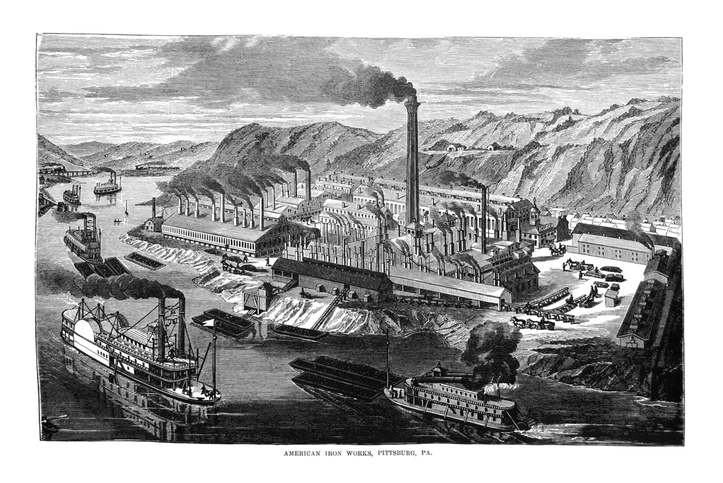
Mercer County’s history is closely tied to the rise of iron and early steel production. While the county began as a largely rural place, with farming, mills, and small settlements shaping daily life, the 1800s brought a major economic shift. Coal, canals, railroads, furnaces, rolling mills, and foundries helped move parts of the county into a new industrial era.
That change was especially visible in the Shenango Valley. Communities such as Sharon, Sharpsville, Wheatland, Farrell, and Hermitage grew around work, production, transportation, and investment. The iron industry did not simply create jobs. It brought money into the region, attracted business activity, supported local institutions, and helped create visible signs of prosperity that still shape the area’s identity today.
The rise of iron production in Mercer County did not happen by chance. Western Pennsylvania had the raw materials, labor, waterways, and transportation routes that early industry needed. In Mercer County, coal became especially important. The county’s early canals, including connections toward the Allegheny River and Erie, helped stimulate coal and iron mining in the 1830s and 1840s.
As transportation improved, the region became better positioned to move raw materials and finished goods. Iron rails, nails, bars, and other products connected Mercer County to a growing national economy. By the middle of the 19th century, Sharon Iron Company had established a rolling mill and foundry, helping turn the Shenango Valley into one of the county’s most important industrial corridors.
This activity created a foundation for economic growth. Mills required workers, managers, suppliers, transportation networks, financial support, and nearby services. As the industry expanded, money moved through the local economy in many directions. Wages supported households. Business owners supplied materials and services.
Merchants served growing communities. Banks, builders, contractors, and property owners all became part of the broader industrial economy.
By the late 1800s, iron and early steel production were helping define Mercer County’s economy. The first steel mill in the county opened in 1887, and Sharon Steel Works followed in 1896. Wheatland also became closely associated with iron and steel manufacturing, with its identity tied to companies such as Wheatland Iron and later manufacturing operations that supported the broader industrial economy of the Shenango Valley.
This period helped create one of the county’s most important economic booms. Industrial production brought capital into the area and helped build fortunes for business owners, investors, and industrial leaders. These companies were not small side operations. They helped anchor entire communities and created demand for housing, transportation, stores, professional services, public improvements, and civic institutions.
The wealth created by iron and steel was visible in the region’s development. In Sharon and nearby communities, industrial success helped support larger homes, stronger commercial districts, improved infrastructure, and new public gathering places. As production expanded, the area became more than a place where goods were made. It became a center of employment, investment, and local influence.
This prosperity was not shared evenly, and mill work was often difficult and physically demanding. Still, the economic impact was significant. The iron industry helped Mercer County move from a primarily agricultural economy toward a more industrial one. It gave the Shenango Valley a stronger regional identity and connected local communities to the broader growth of Pennsylvania’s manufacturing economy.
One of the clearest examples of industrial wealth in Mercer County is the legacy of Frank H. Buhl. Buhl was closely connected to Sharon’s iron and steel history, and his success reflected the larger industrial growth of the Shenango Valley. His family’s ties to Sharon Iron Works and his later business activity helped make him one of the most recognized industrial figures in the region.
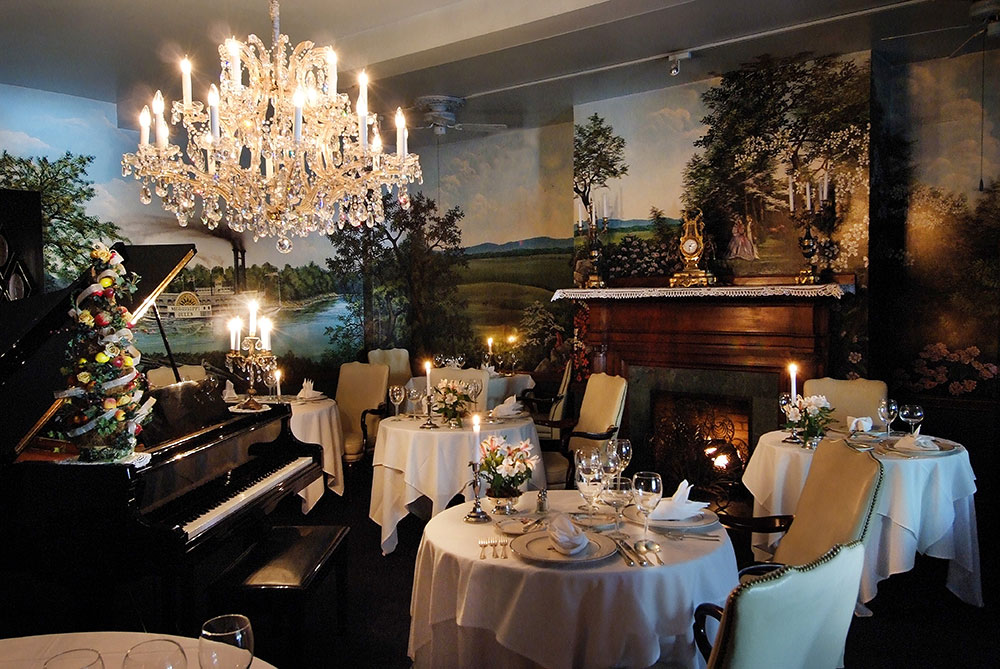
The wealth generated through industry did not remain only inside mills or business offices. In Sharon and the surrounding area, it also appeared in architecture, philanthropy, recreation, and civic life. Buhl Mansion, built in the 1890s, remains one of the clearest examples of the prosperity associated with the industrial era. Its scale and design reflect a period when industrial success was evident in the homes, institutions, and public spaces built by leading families.
The Buhl legacy also extended into the community. Parks, recreational facilities, and charitable efforts helped shape residents’ experiences of the benefits of industrial wealth, which matters because it shows that the iron and steel economy influenced more than employment. It helped fund the region’s public and civic life.
Wealth from industry helped build places where people gathered, learned, worshiped, shopped, and spent their leisure time. In this way, the economic boom changed the social landscape of Mercer County as much as the physical one.
Wheatland’s history is an important part of this industrial story. Located along the Shenango River, Wheatland developed as a manufacturing community tied to iron, steel, and related industries. Its growth reflected the same forces seen throughout the valley: access to transportation, proximity to industrial centers, available labor, and the financial opportunity created by manufacturing.
Sharon became one of the best-known industrial communities in Mercer County. Its iron and steel operations helped support population growth, business development, and civic expansion. Nearby communities were connected through work, transportation, family life, and commerce. The industrial economy did not stop at municipal borders. It linked towns together and helped create a shared regional identity built around production and prosperity.
Farrell later became another major steel center in the valley. The development of South Sharon, later Farrell, illustrates how industrial expansion could spur the growth of entire communities. As mills opened and expanded, neighborhoods grew around them. Workers lived close to the plants, merchants served industrial families, and local governments adapted to the needs of fast-growing towns.
This kind of growth was one of the strongest signs of the boom. Industry not only created products. It created towns, strengthened local economies, and helped establish the Shenango Valley as one of Mercer County’s defining regions.
Today, visitors may not always see the iron industry at first glance. Many old furnaces, mills, and industrial sites have changed, closed, been redeveloped, or disappeared. Yet the influence of the iron and steel era remains visible across Mercer County.
It can be seen in historic homes, civic buildings, former industrial communities, street patterns, museums, and landmarks. It can also be seen in the way local communities remember themselves. Sharon, Hermitage, Wheatland, Farrell, and Sharpsville all carry pieces of this industrial past. Their stories are tied to the people who worked in the mills, the families who built lives around that work, and the business leaders who invested in the region.
The wealth created during the industrial era helped shape more than the economy. It influenced architecture, philanthropy, public spaces, neighborhoods, and community identity. Local museums, historic preservation groups, and heritage attractions help keep this history accessible. They give residents and visitors a way to understand how Mercer County grew and why the Shenango Valley became such an important industrial area.
The iron industry’s lasting influence on Mercer County is a story of economic change and industrial wealth. It shows how raw materials, transportation, investment, and labor came together to reshape a region. The boom brought jobs, business activity, buildings, institutions, and new communities. It also brought challenges, including hard labor, unequal access to wealth, and dependence on large employers.
Understanding this history gives visitors a clearer view of Mercer County today. The region’s historic sites, neighborhoods, and community landmarks are not isolated points of interest. They are connected to a broader story of work, wealth, growth, and change.
The iron industry helped build the Shenango Valley into one of Mercer County’s defining regions. Its influence remains part of the county’s character, not only in what was made here, but in the prosperity, institutions, and communities that grew from it.
Plan your visit to Mercer County today to learn more about the area’s rich history.